Language is never just words; sometimes a single syllable holds an entire universe of feeling. Tagalog, the heart of Filipino expression, is full of rare, breathtaking terms that English can only circle around. Here are 10 poetic Tagalog words so deep and beautiful they deserve to live forever inside your favorite images.
Gigil The irresistible urge to squeeze something extremely cute (often accompanied by clenched teeth and trembling hands). Quote for image: “I love you with gigil— the kind that makes me want to crush you with tenderness until the whole world feels how adorable you are.”
Kilig That fluttering, butterflies-in-the-stomach rush when something romantic happens. Quote for image: “One message from you and the whole day becomes kilig-colored.”
Alimpungatan Waking up because someone you love just entered your dreams. Quote for image: “I woke up smiling— alimpungatan again, because even in sleep you came home to me.”
Tampo The silent, sulky treatment you give someone you love because they hurt you—but you still love them too much to truly walk away. Quote for image: “My tampo is not anger. It is love wearing a pout, waiting for your apology kiss.”
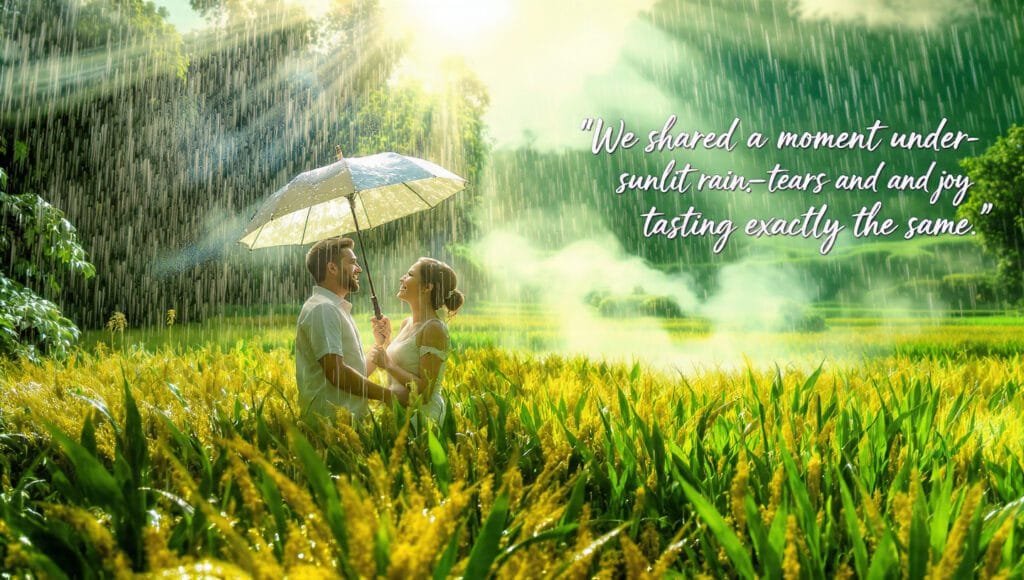
Balisawsaw The bittersweet feeling when rain starts falling while the sun is still shining. Quote for image: “We kissed under balisawsaw— sunlit rain, tears and joy tasting exactly the same.”
Pag-ibig na hinintay Love that was waited for (the sweetest kind, because every second of longing made the arrival divine). Quote for image: “You are my pag-ibig na hinintay— worth every lonely night, every unanswered prayer, every almost.”
Saudade (borrowed but fully adopted in Filipino hearts) + Nawawala sa sarili The Tagalog way: feeling lost in longing for someone absent. Quote for image: “Nawawala ako sa sarili kapag wala ka— I lose myself when you’re not here.”
Lambing The gentle, almost childlike sweetness you show only to the person who feels like home. Quote for image: “Give me your lambing— that soft voice, that playful clinginess— and I will give you my forever.”
Umayaw sa saya When happiness is so overwhelming you almost want to refuse it because it feels too good to be real. Quote for image: “Ang saya ko umayaw na ako— I’m so happy I almost said no, scared that dreams this beautiful wake up and leave.”
Salamisim The quiet, delicious anticipation right before something wonderful happens (like tasting a memory before it arrives). Quote for image: “I can already taste you in the air— salamisim, the sweetest second before your kiss.”
Save these. Screenshot them. Turn them into golden-hour aesthetics, film-grain overlays, or pastel minimalism—because some feelings only Tagalog can hold perfectly.
Russian, a language of soulful expression and literary depth, is filled with words that capture profound emotions and cultural nuances. This list of 40 beautiful Russian words with deep meanings is crafted for global readers, with pronunciations and explanations to highlight their significance, optimized for those seeking poetic vocabulary.
The Soul of Russian Language
Russian words often blend raw emotion with philosophical undertones, reflecting the nation’s rich history and literature. This list is ideal for language enthusiasts and learners.
The List of 40 Russian Words
Тоска (Toska) (/tɒsˈkɑ/) – Spiritual anguish. A deep, indefinable yearning, as in Dostoevsky’s works.
Душа (Dusha) (/duˈʃɑ/) – Soul. The essence of a person’s being.
Любовь (Lyubov’) (/ljuˈbɒf/) – Love. Romantic or universal affection.
Мир (Mir) (/miːr/) – Peace or world. Harmony or the global community.
Надежда (Nadezhda) (/nəˈdjeʒdə/) – Hope. Optimism for a better future.
Свобода (Svoboda) (/svɒˈbɒdə/) – Freedom. Liberation of spirit or action.
Красота (Krasota) (/krəsɒˈtɑ/) – Beauty. Aesthetic or inner perfection.
Тишина (Tishina) (/tɪˈʃiːnə/) – Silence. The calm of a quiet Russian forest.
Свет (Svet) (/svjɛt/) – Light. Illumination, physical or spiritual.
Мечта (Mechta) (/mjɛtʃˈtɑ/) – Dream. Aspirations or visions in sleep.
Вдохновение (Vdokhnovenie) (/vdɒxnɒˈvjenɪjə/) – Inspiration. A creative spark.
Радость (Radost’) (/ˈrɑːdɒst/) – Joy. Pure happiness in celebration.
Сердце (Serdtse) (/ˈsjɛrdtsə/) – Heart. The seat of emotions.
Путь (Put’) (/puːt/) – Path. Life’s journey or destiny.
Вера (Vera) (/ˈvjɛrə/) – Faith. Belief in God or ideals.
Желание (Zhelanie) (/ʒɛˈlɑːnɪjə/) – Desire. A deep longing.
Тепло (Teplo) (/tjɛˈplɒ/) – Warmth. Emotional or physical coziness.
Звезда (Zvezda) (/zvjɛzˈdɑ/) – Star. Symbol of aspiration and wonder.
Судьба (Sud’ba) (/sudˈbɑ/) – Fate. The course of one’s life.
Conclusion: Russian’s Poetic Soul
These 40 beautiful Russian words with deep meanings capture the language’s emotional and philosophical richness. Explore them through Russian literature or language courses to deepen your connection.
Arabic, a language of poetry and eloquence, is renowned for its expressive vocabulary that captures profound emotions and cultural nuances. For readers in the Middle East and globally, this list of 40 beautiful Arabic words with powerful meanings offers a window into the language’s depth. Each word includes pronunciation, meaning, and context, optimized for those seeking meaningful expressions.
The Power of Arabic Vocabulary
Arabic words often carry layers of spiritual, emotional, and historical significance, rooted in the region’s rich heritage. This list is ideal for language learners and cultural enthusiasts.
The List of 40 Arabic Words
نور (Nūr) (/nuːr/) – Light. Symbolizes divine guidance or inner radiance.
حب (Ḥubb) (/ħʊbb/) – Love. Deep affection, central to Arabic poetry.
سلام (Salām) (/salaːm/) – Peace. A greeting and wish for tranquility.
رحمة (Raḥma) (/raħma/) – Mercy. Compassion, often tied to divine kindness.
جمال (Jamāl) (/dʒamaːl/) – Beauty. Aesthetic or inner perfection.
صبر (Ṣabr) (/sˤabr/) – Patience. Endurance through trials, a valued virtue.
أمل (Amal) (/ʔamal/) – Hope. Optimism for a brighter future.
حياة (Ḥayāh) (/ħajaːh/) – Life. The essence of existence.
روح (Rūḥ) (/ruːħ/) – Soul. The spiritual core of a person.
حرية (Ḥurriya) (/ħurrijja/) – Freedom. Liberation of body and spirit.
شوق (Shawq) (/ʃawq/) – Longing. Intense yearning for someone or something.
إيمان (Īmān) (/ʔiːmaːn/) – Faith. Steadfast belief in God or principles.
كرم (Karam) (/karam/) – Generosity. Noble giving without expectation.
عشق (‘Ishq) (/ʕɪʃq/) – Passionate love. An intense, almost spiritual romance.
فرح (Faraḥ) (/faraħ/) – Joy. Pure happiness in moments of celebration.
ذكرى (Dhikrā) (/ðɪkraː/) – Memory. A cherished recollection.
نسمة (Nasma) (/nasma/) – Breeze. A gentle wind, symbolizing refreshment.
قلب (Qalb) (/qalb/) – Heart. The seat of emotions and love.
هدوء (Hudū’) (/huduːʔ/) – Serenity. Quiet calmness, like a desert night.
طموح (Ṭumūḥ) (/tˤumuːħ/) – Ambition. Drive to achieve greatness.
أناقة (Anāqa) (/ʔanaːqa/) – Elegance. Refined grace in appearance or manner.
صدق (Ṣidq) (/sˤɪdq/) – Sincerity. Genuine truthfulness in actions.
سعادة (Sa‘āda) (/saʕaːda/) – Happiness. Deep contentment with life.
حنين (Ḥanīn) (/ħaniːn/) – Nostalgia. Longing for the past.
غروب (Ghurūb) (/ɣuruːb/) – Sunset. The beauty of day’s end.
رحلة (Riḥla) (/rɪħla/) – Journey. A voyage of discovery, physical or spiritual.
Conclusion: Arabic’s Expressive Depth
These 40 beautiful Arabic words with powerful meanings offer a glimpse into the language’s poetic soul. Explore them through language courses or Middle Eastern literature to deepen your appreciation.
Chinese, with its ancient roots and poetic structure, offers words that blend sound, meaning, and philosophy in ways that captivate the imagination. For readers in China and globally, this list of 40 beautiful Chinese words with deep meanings provides insight into the language’s emotional and cultural depth. Each word includes pinyin, meaning, and context, optimized for those seeking to explore Chinese linguistic beauty.
The Beauty of Chinese Vocabulary
Chinese words often combine characters to express complex ideas succinctly, reflecting millennia of philosophy and culture. This list is perfect for learners and enthusiasts worldwide.
The List of 40 Chinese Words
缘分 (Yuánfèn) (/jwɛnˈfən/) – Destined connection. The serendipitous bond between two people meant to meet.
和 (Hé) (/xə/) – Harmony. The balance valued in Chinese philosophy and daily life.
静 (Jìng) (/dʒɪŋ/) – Serenity. The calm of a quiet temple in the mountains.
仁 (Rén) (/rən/) – Benevolence. Confucian virtue of kindness and humanity.
美 (Měi) (/meɪ/) – Beauty. Aesthetic perfection in art or nature.
道 (Dào) (/daʊ/) – The Way. The Taoist path of living in harmony with the universe.
爱 (Ài) (/aɪ/) – Love. Deep affection, from romantic to familial.
思 (Sī) (/sɯ/) – Thoughtful longing. Missing someone deeply, as in poetry.
灵 (Líng) (/lɪŋ/) – Spirit or soul. The ethereal essence of a person or place.
志 (Zhì) (/dʒi/) – Aspiration. A determined pursuit of goals.
禅 (Chán) (/tʃæn/) – Zen meditation. Inner peace through mindfulness, rooted in Buddhism.
风 (Fēng) (/fəŋ/) – Wind or style. The grace of a flowing breeze or artistic flair.
梦 (Mèng) (/məŋ/) – Dream. Aspirations or visions in sleep.
诗 (Shī) (/ʃi/) – Poetry. The art of expressing emotion through words.
云 (Yún) (/jyn/) – Cloud. Symbolizing freedom and transience.
光 (Guāng) (/ɡwɑŋ/) – Light. Illumination, both literal and metaphorical.
意 (Yì) (/ji/) – Intention or meaning. The heart’s purpose behind actions.
远 (Yuǎn) (/jwæn/) – Distant. A longing for far-off places or times.
心 (Xīn) (/ʃɪn/) – Heart or mind. The seat of emotions and thoughts.
静谧 (Jìngmì) (/dʒɪŋˈmi/) – Tranquil silence. The peace of a quiet night in rural China.
自由 (Zìyóu) (/tsɯˈjoʊ/) – Freedom. Liberation of spirit or action.
希望 (Xīwàng) (/ʃiˈwɑŋ/) – Hope. Optimism for the future.
温暖 (Wēnnuǎn) (/wənˈnwæn/) – Warmth. Emotional or physical coziness.
优雅 (Yōuyǎ) (/joʊˈjɑ/) – Elegance. Graceful refinement in demeanor.
坚韧 (Jiānrèn) (/dʒjɛnˈrən/) – Resilience. Strength to endure challenges.
宁静 (Níngjìng) (/nɪŋˈdʒɪŋ/) – Serenity. Calmness of a still lake at dawn.
流年 (Liúnián) (/ljoʊˈnjɛn/) – Fleeting years. The passage of time, often nostalgic.
相思 (Xiāngsī) (/ʃjɑŋˈsɯ/) – Lovesickness. Deep yearning for a loved one.
清新 (Qīngxīn) (/tʃɪŋˈʃɪn/) – Freshness. The crisp feeling of a spring morning.
永恒 (Yǒnghéng) (/jʊŋˈxəŋ/) – Eternity. Timelessness of love or ideals.
信念 (Xìnniàn) (/ʃɪnˈnjɛn/) – Faith. Steadfast belief in principles.
淡然 (Dànrán) (/dænˈræn/) – Nonchalance. Calm detachment from worldly concerns.
悠然 (Yōurán) (/joʊˈræn/) – Leisurely ease. Relaxed enjoyment of life.
明月 (Míngyuè) (/mɪŋˈjweɪ/) – Bright moon. Symbol of clarity and romance.
惜别 (Xībié) (/ʃiˈbjɛ/) – Reluctant farewell. The pain of parting with someone dear.
寄托 (Jìtuō) (/dʒiˈtwo/) – Entrust or repose. Placing hopes in someone or something.
澄澈 (Chéngchè) (/tʃəŋˈtʃə/) – Crystal clear. Purity of water or thought.
初心 (Chūxīn) (/tʃuˈʃɪn/) – Original aspiration. Staying true to one’s initial dreams.
Conclusion: Embrace Chinese Linguistic Depth
These 40 beautiful Chinese words with deep meanings reflect the language’s poetic and philosophical richness. Use them to enhance your understanding or explore Chinese culture through language apps and literature.
Across Europe, languages weave unique cultural tapestries, producing words that defy direct translation yet carry profound meanings. For Europeans and global readers fascinated by linguistic diversity, this list of 40 untranslatable words from various languages (primarily European, with some global gems) offers a glimpse into concepts that capture the human experience. Each word includes pronunciation, meaning, and cultural context, optimized for those seeking unique expressions.
The Charm of Untranslatable Words
Untranslatable words reveal cultural nuances that English often lacks. This collection highlights terms that resonate emotionally and philosophically, perfect for language enthusiasts across Europe.
The List of 40 Untranslatable Words
Saudade (Portuguese, /sowˈðaðə/) – Deep longing for something absent. A melancholic nostalgia for a lost love or homeland, common in Portuguese fado music.
Hygge (Danish, /ˈhʊɡə/) – Cozy contentment. The warmth of a candlelit gathering with friends in Copenhagen.
Fernweh (German, /ˈfɛʁnˌveː/) – Longing for faraway places. A restless urge to travel beyond one’s borders.
Toska (Russian, /ˈtɒskə/) – Profound spiritual anguish. A soul-deep yearning with no clear cause, as in Russian literature.
Fika (Swedish, /ˈfiːkə/) – Coffee break with socializing. A cherished Swedish ritual of pausing for coffee and connection.
Duende (Spanish, /ˈdwende/) – Passionate artistic inspiration. The raw emotion in a flamenco dancer’s performance.
Gezellig (Dutch, /ɣəˈzɛlɪx/) – Cozy, convivial atmosphere. A warm evening in an Amsterdam café with friends.
Litost (Czech, /ˈlɪtoʊst/) – Regret mixed with shame. The pang of seeing one’s own flaws exposed.
Mamihlapinatapai (Yaghan, /ˌmɑːmiːˌlɑːpɪnəˈtɑːpaɪ/) – A shared look of longing. Two people wanting to initiate something but hesitating, from Tierra del Fuego.
Sisu (Finnish, /ˈsiːsu/) – Resilient determination. Grit to persevere through harsh Nordic winters.
Cafuné (Portuguese, /kafuˈneɪ/) – Running fingers through a loved one’s hair. A tender gesture of affection in Brazilian culture.
Komorebi (Japanese, /ˌkoʊmoʊˈreɪbi/) – Sunlight filtering through trees. A poetic Japanese term for nature’s beauty.
Wabi-sabi (Japanese, /ˌwɑːbiˈsɑːbi/) – Beauty in imperfection. Appreciating the flaws in a handmade ceramic bowl.
Hiraeth (Welsh, /ˈhɪəraɪθ/) – Homesickness for an unattainable place. Longing for a lost Welsh homeland.
Saudade (Galician, /sowˈðaðe/) – Yearning for the absent. Similar to Portuguese, a Galician longing for what’s gone.
Tartle (Scots, /ˈtɑːrtl/) – Hesitation when forgetting a name. The awkward pause during introductions in Scotland.
Meraki (Greek, /məˈrɑːki/) – Doing something with soul. Pouring love into a homemade Greek meal.
Sobremesa (Spanish, /ˌsoʊbreɪˈmeɪsə/) – Post-meal conversation. Lingering at the table after a Spanish dinner.
Kilig (Tagalog, /ˈkiːlɪɡ/) – Romantic thrill. Butterflies from a sweet gesture, popular in Filipino culture.
Jayus (Indonesian, /ˈdʒɑːjuːs/) – A joke so bad it’s funny. Laughing at a friend’s corny pun.
Flâner (French, /flɑːˈneɪ/) – Aimless strolling. Wandering Paris streets with no destination.
Forelsket (Norwegian, /ˈfɔːrɛlskət/) – Euphoria of new love. The giddy feeling of a budding romance.
Ikigai (Japanese, /ˌiːkiːˈɡaɪ/) – Reason for being. Finding purpose in daily life.
Pochemuchka (Russian, /ˌpɒtʃɪˈmuːtʃkə/) – Someone who asks too many questions. A curious child in a Moscow classroom.
Tsundoku (Japanese, /ˌtsʊnˈdoʊku/) – Buying books and not reading them. A stack of unread novels on a bookshelf.
Retrouvailles (French, /ˌreɪtruːˈvaɪ/) – Joy of reuniting. Embracing a friend after years apart.
L’appel du vide (French, /læˈpel du viːd/) – Urge to jump from a height. The strange pull felt on a cliff’s edge.
Ya’aburnee (Arabic, /ˌjɑːʔɑːbʊrˈniː/) – Hope to die before a loved one. A profound expression of love’s depth.
Gökotta (Swedish, /ˈjœːkɒtə/) – Waking early to hear birdsong. A Swedish appreciation for nature’s dawn chorus.
Tingo (Pascuense, /ˈtɪŋɡoʊ/) – Borrowing until nothing’s left. A playful term from Easter Island.
Schadenfreude (German, /ˈʃɑːdənˌfrɔɪdə/) – Joy in another’s misfortune. A guilty chuckle at a rival’s misstep.
Torschlusspanik (German, /ˈtɔːrʃlʊsˌpɑːnɪk/) – Fear of time running out. Anxiety about life’s opportunities slipping away.
Ubuntu (Nguni Bantu, /uːˈbuːntuː/) – Humanity toward others. A South African philosophy of interconnectedness.
Sprezzatura (Italian, /ˌspret.səˈtʊərə/) – Effortless grace. The cool ease of an Italian artist’s performance.
Dépaysement (French, /deɪˌpeɪzˈmɑ̃/) – Feeling of being in a foreign place. The disorientation of arriving in a new country.
Lagom (Swedish, /ˈlɑːɡɔm/) – Just the right amount. The Swedish ideal of balance in life.
Saudade de ninho (Portuguese, /sowˈðaðeɪ deɪ ˈniɲu/) – Longing for childhood home. A Brazilian term for missing one’s roots.
Litost (Slovak, /ˈlɪtoʊst/) – Regret and remorse mix. Similar to Czech, a complex emotional state.
Boketto (Japanese, /boʊˈkettoʊ/) – Gazing vacantly. Daydreaming without focus, a meditative state.
Koi no yokan (Japanese, /ˌkɔɪ noʊ ˈjoʊkɑːn/) – Premonition of love. Sensing a connection will blossom into romance.
Conclusion: A World of Meaning
These 40 untranslatable words from around the world offer a window into diverse cultures, especially in Europe. Incorporate them to enrich your perspective or explore language learning platforms for more.